Mass Firing of NSF Advisory Board Draws Rebuke from HPC Community Members

by Alex Woodie
President Trump’s decision to fire all 22 members of the National Science Board last week has drawn outrage from members of the scientific community, including leaders of university supercomputing that receive funding from the National Science Foundation.
The NSB is an independent board created in 1950 to advise the newly created NSF on investments into scientific research. NSB board members are appointed by the president and serve six-year terms in advisory roles that are non-political. On April 24, all sitting members received emails stating that, “on behalf of President Donald J. Trump,” they were “terminated, effective immediately,” according to reports.
The sudden firing angered Distinguished Professor David Bader, the founder of the Department of Data Science and Director of the Institute for Data Science at the New Jersey Institute of Technology, a recipient of NSF funding.
“The dismissal of all 22 members of the National Science Board is an assault on the foundation of American scientific leadership,” Bader tells HPCwire via email. “The NSB has served since 1950 as the independent body ensuring that our nation’s investments in fundamental research are guided by scientific merit rather than political expediency. Eliminating that oversight doesn’t streamline anything. It removes the guardrails that have made NSF the gold standard for research funding worldwide.”
“This action to dismiss the NSB is unprecedented,” Dan Reed, a computer scientist at the University of Utah in Salt Lake City and chair of the NSB from 2022 to 2024, told the journal Nature. “We need a vibrant, independent NSB, one representative of the broad science and engineering enterprise.”
“This is the latest stupid move made by a president who continues to harm science and American innovation,” stated Congresswoman Zoe Lofgren of California, the ranking Democrat on the House Committee on Science, Space, and Technology. “It unfortunately is no surprise a president who has attacked NSF from day one would seek to destroy the board that helps guide the Foundation.”
During Trump’s second term, the NSF has frozen or canceled more than 1,500 grants, totaling more than $1 billion. While those numbers sound big, they are less than the 50% slash in funding that the Trump administration sought for the agency, which previously had a budget of about $9 billion per year. The cuts have been concentrated in areas like climate change, health, gender, and education, as the administration seeks to increase funding in AI and energy research.
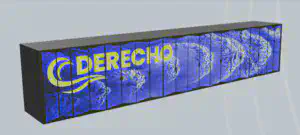
In February, the Trump Administration’s decision to shift management and operations of the NSF’s NCAR-Wyoming Supercomputing Center–which runs the $35 million Derecho supercomputer–to a third-party led to concerns about the future of climate change research at the National Center for Atmospheric Research.
The NSF cuts are shortsighted and will come back to haunt us, NJIT’s Bader said. But the firing of the NSB is particularly damaging and will have a compounding effect on investment in scientific research, he added.
“The HPC community owes an enormous debt to NSF and the strategic vision the NSB helped shape,” Bader told us. “NSF created the national supercomputing centers, funded NSFNET which became the backbone of the modern Internet, and built the infrastructure pipeline from TeraGrid to XSEDE to ACCESS that has kept American researchers at the frontier of computational science for decades.
“NSF funding supported the development of the first Linux supercomputer, Roadrunner, which revolutionized the industry by proving that commodity clusters could compete with purpose-built machines,” he continued. “That single insight reshaped the entire Top500 List and launched the era of affordable, scalable supercomputing. None of that happens without an independent board setting long-term priorities free from short-term political pressures.”
The NSF’s scientific investments have had a hand in shaping America’s technological competitiveness, ranging from the creation of MRI machines to AI algorithms, Bader said. The NSB board member’s terms were staggered specifically to insulate them from political concerns, which makes the mass firing even more damaging.
“Undermining the institution that steers those investments is not just shortsighted. It is a strategic vulnerability at a moment when our global competitors are accelerating their own science and technology investments,” Bader said. “Breaking that structure in one stroke sends a chilling message to the entire research community: independent scientific judgment is no longer welcome in the halls of government.”

David A. Bader
Distinguished Professor, Associate Dean for Research, and Director of the Institute for Data Science
David A. Bader is a Distinguished Professor in the Department of Data Science and Associate Dean for Research in the Ying Wu College of Computing at New Jersey Institute of Technology.